Why a New Hope Repaint Job Can Take as Long as a New Hope Addition
Steven Dome September 3, 2026
Steven Dome September 3, 2026
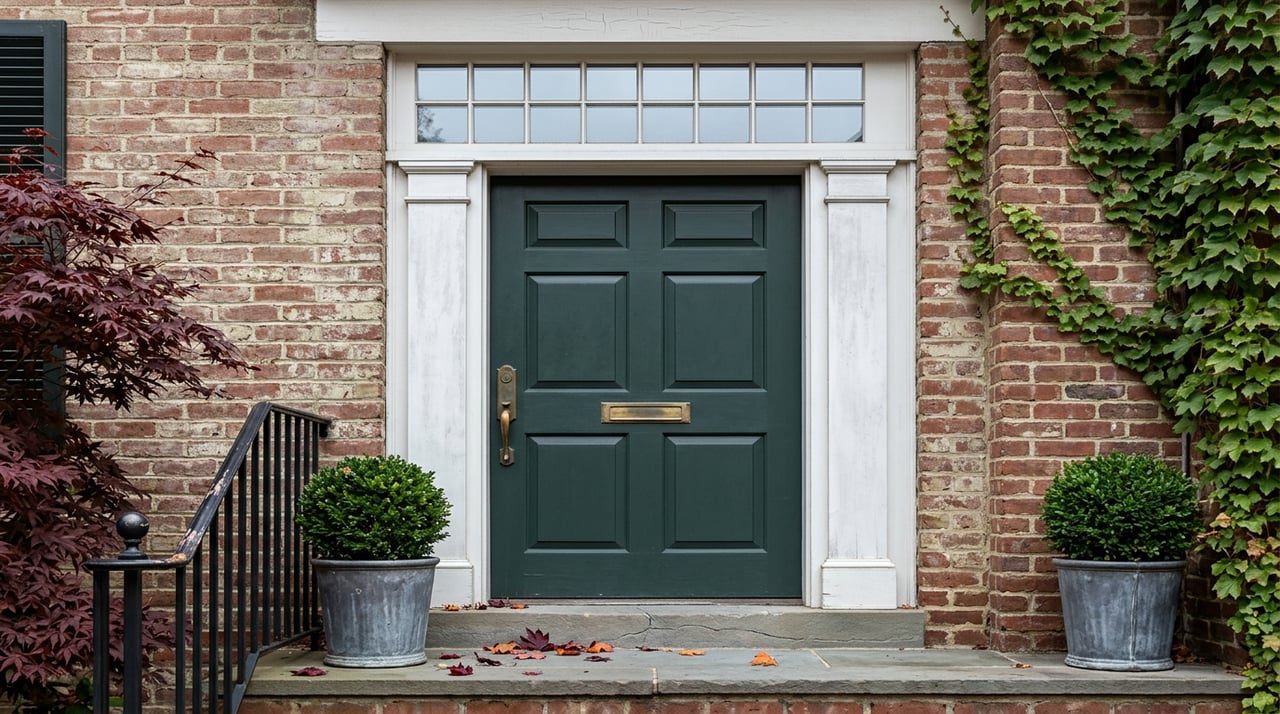
In February 2026, the New Hope Historic Architectural Review Board spent several minutes of a public meeting on a single question: should the doors on a building at 142 South Main Street stay white, or should they be repainted to match the darker trim going in elsewhere on the property. Board members asked the applicant to clarify frame color, trim color, and size. The property owner was asked to weigh in. Nobody was proposing an addition. Nobody was tearing anything down. It was a door color, and it still needed a formal hearing.
That's the part buyers underestimate when they close on a home inside New Hope Borough's Historic District. The review process here doesn't scale with the size of your project. A new deck gets the same procedural path as a repaint. A roof replacement goes through the same door as a rebuilt facade. If you're planning to touch anything on the outside of a historic district property after closing, the calendar starts working against you the moment you sign, not the moment you pick up a paintbrush.
New Hope's Historic Architectural Review Board, known as HARB, was established in 1987 under Borough Ordinance 183-A1. It has nine members appointed by Borough Council to staggered three-year terms, and its authority covers one thing: any change to a building's exterior that can be seen from a public street or way inside the Historic District.
The borough's own ordinance spells out what triggers review, and the list is broader than most buyers expect. Construction or reconstruction that involves additions, replacement, rehabilitation, restoration, or painting of a facade all require a Certificate of Appropriateness. So do changes to signage or exterior lighting. So do changes to fencing or other landscaping features that are visible from the street. Even buildings that aren't individually historic still fall under HARB's jurisdiction if they sit inside the district boundary.
There's no minimum threshold. Nothing in the ordinance exempts small projects because they're small. The trigger is whether the change is visible from a public right of way, full stop. That's why a door color question and a full facade rebuild sit on the same agenda, reviewed by the same nine people, under the same process.
The 2026 HARB agendas make the pattern easy to see. In January, the board reviewed an application for 45 South Main Street covering carpentry, paint, and masonry repair. In April, an application for 11-35 West Bridge Street, filed under owner Genevieve Gross, covered replacement roofing, gutters, balcony railings, exterior painting, and a new ground-level deck with railing. And in February, the board worked through the door and trim color questions at 142 South Main Street, the kind of decision most homeowners elsewhere would settle over a paint chip at the hardware store.
None of these applicants got a shortcut because their project was cosmetic rather than structural. Each one filed the same paperwork, sat through the same monthly meeting cycle, and waited for the same two-step sign-off before picking up a tool.
Here's the mechanic that catches buyers off guard. A Certificate of Appropriateness from HARB isn't the finish line. It's a prerequisite for the building permit, and the building permit process runs on its own separate track.
The borough's own guidance lays out the order of operations. Applications for zoning and construction permits, along with the applicable fees, have to be submitted before you can even apply to HARB. The borough recommends filing those zoning and code applications at least twenty business days ahead of the monthly HARB meeting, so the Zoning Officer and Code Official have time to confirm compliance. The HARB application itself is due a minimum of twenty-one business days before the meeting.
Once HARB reviews the application, its recommendation goes to Borough Council, which is the body that actually issues the Certificate of Appropriateness. Only after that certificate is issued can you move forward with the zoning and construction permits required to legally start work. Written decisions are mailed to applicants rather than announced on the spot, which adds its own lag.
Run the math and a straightforward exterior project, filed correctly on the first attempt, is realistically a six to eight week process before a shovel or paintbrush touches the building. Miss a filing deadline by a day and you're not waiting a few days for the next opening. You're waiting for next month's meeting.
The one piece of good news: this isn't a revenue-driven gate. There's no application or review fee, and the only charge a homeowner might see is up to ten dollars if the borough takes property photographs as part of the file. The friction here is procedural, not financial.
The jurisdiction has a real limit, and it's worth knowing where it stops. HARB and Borough Council only have authority over exterior architectural features visible from a public street or way. That means interior renovations, kitchen remodels, bathroom updates, structural work that doesn't change what's visible from the sidewalk, none of it requires a Certificate of Appropriateness. If you're buying a historic district property because you want to gut and modernize the inside while keeping the street-facing character intact, that work moves on the borough's ordinary permitting timeline, not HARB's.
The practical upshot is that the review process rewards buyers who separate their renovation wish list into two buckets early: what changes the building's face to the street, and what doesn't. One bucket needs a calendar built around monthly meetings. The other doesn't.
If you're touring a home inside New Hope's Historic District with renovation plans already in mind, the HARB process isn't something to research after closing. It's something to price into your timeline before you make an offer.
A buyer who wants a new deck, replacement windows, or a different exterior paint scheme needs to know that project won't start the weekend after closing. It starts with a filing that has to land three weeks before a monthly meeting that may or may not fall conveniently after your move-in date. A buyer weighing two similar-looking historic district homes, one with a facade or roof that's already been through HARB approval and one that hasn't, is looking at two very different renovation clocks even if the sale prices are close.
This is also where a design-trained eye earns its keep before you're deep into an application. Knowing which features on a property are likely to be treated as contributing to the district's historic character, and which are more likely to sail through review, changes how you plan a project and how you sequence an offer. That's the kind of read that comes from spending time inside these buildings, not from reading the ordinance cold.
Does every property in New Hope Borough fall under HARB review? No. The jurisdiction applies specifically to properties inside the Historic District boundary. A property outside that boundary follows the borough's standard zoning and permitting process without a Certificate of Appropriateness.
If I'm repainting the exact same color, do I still need approval? The ordinance requires a Certificate of Appropriateness for any change to a facade, including painting, so consistency of color doesn't automatically exempt you. It's worth confirming directly with the Borough Office Administrator before assuming a like-for-like repaint is exempt.
How long after HARB recommends approval does Borough Council actually issue the certificate? The borough's process sends HARB's recommendation to Council for consideration, and written decisions are mailed to applicants afterward. Attending both the HARB and Council meetings is the borough's own recommendation for avoiding delays.
If you're weighing a purchase in New Hope's Historic District and want to know what a specific property's renovation timeline could realistically look like before you write an offer, Steven Dome can walk through it with you.
September 17, 2026
September 17, 2026
September 10, 2026
September 3, 2026
September 2, 2026
September 2, 2026
August 27, 2026
August 20, 2026
August 13, 2026
Get assistance in determining current property value, crafting a competitive offer, writing and negotiating a contract, and much more. Contact me today.
Contact me to learn more.

550 Union Square Drive New Hope, PA 18938