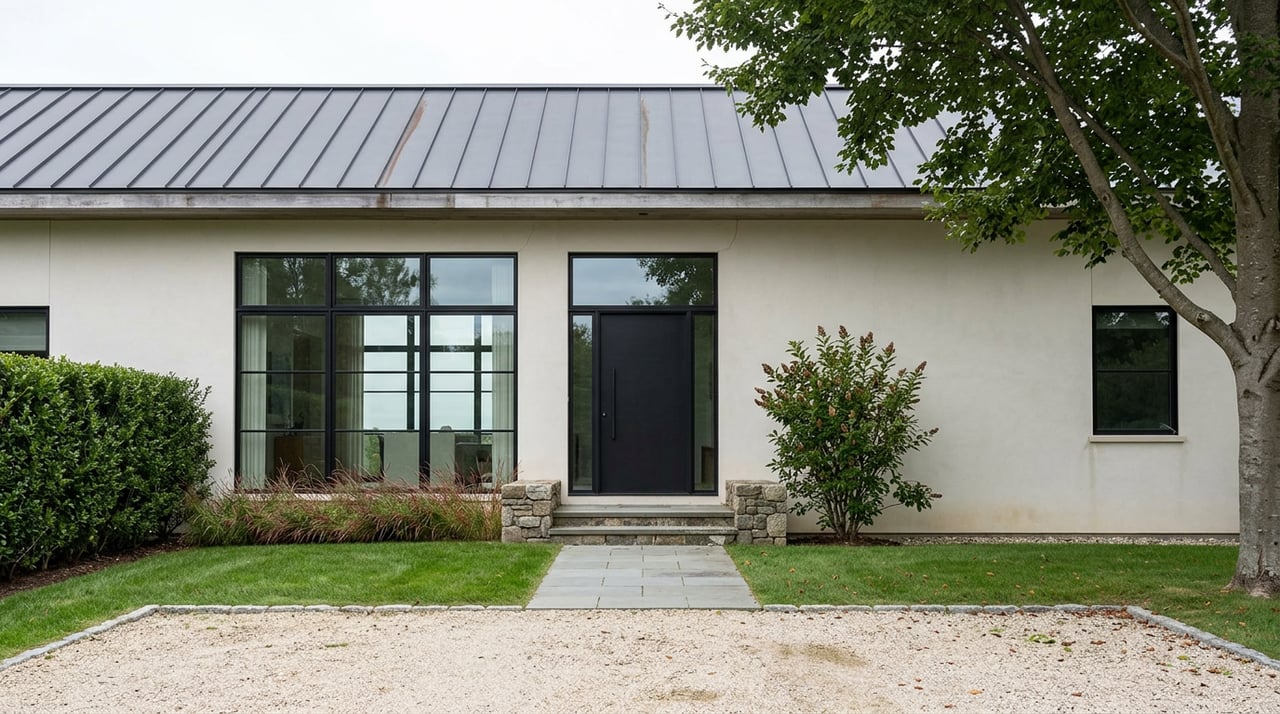
Washington Crossing Real Estate: Why Two Estate Lots Can Mean Two Different Closings
August 20, 2026
August 20, 2026
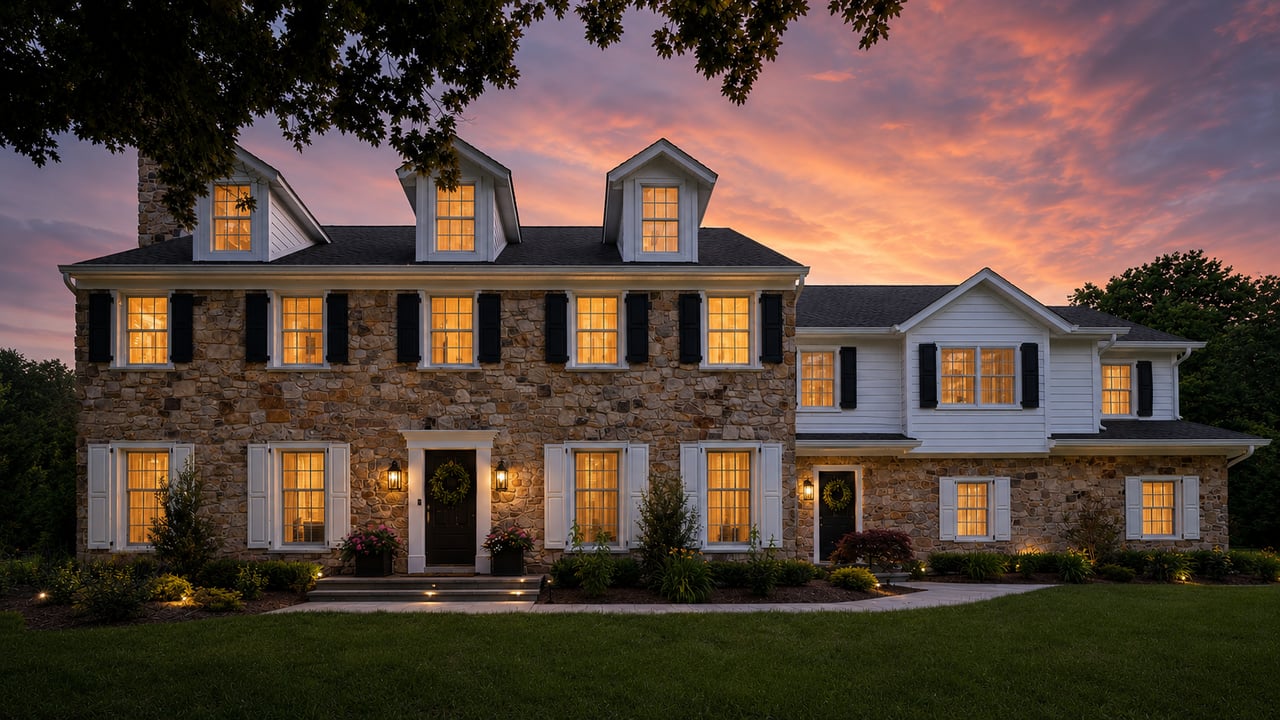
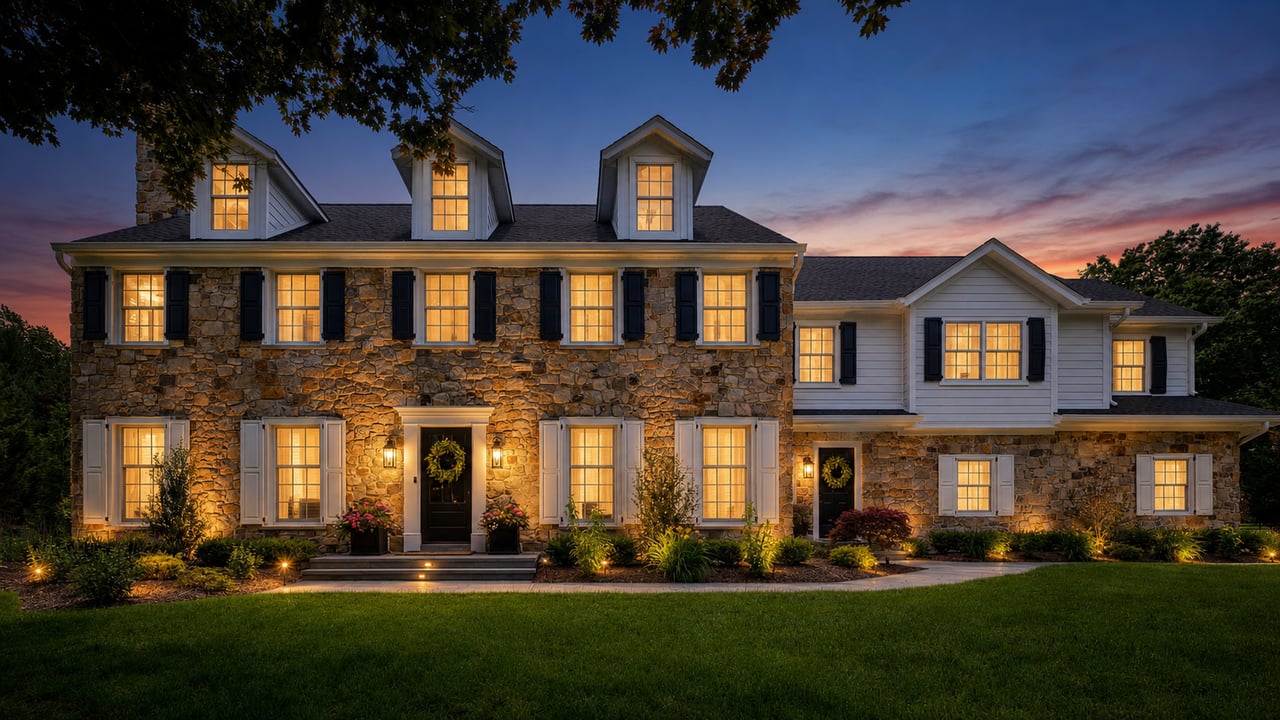
Picture two buyers touring the same stretch of road in Washington Crossing on the same Saturday. One is looking at a stone farmhouse that has sat on its acreage since before the township started keeping subdivision files. The other is looking at a newer custom build three driveways down, finished within the last decade on a lot that didn't exist as its own parcel until a developer carved it out of a larger tract. Same road, same rural feel, same general price range. At the closing table, though, one of these buyers will sign paperwork the other never sees.
That difference is not an accident of which agent they used or which title company handled the deal. It is written into Upper Makefield Township's own subdivision and land development ordinance, and it is the piece of the Washington Crossing market that a portal search will never surface.
Start with what a buyer actually sees when they search. In July 2026, the median list price for homes across Upper Makefield Township, which includes Washington Crossing, sat at $699,000, working out to roughly $155 a square foot. That is the number that shows up in a broad search of the township.
It is also not what the estate-style stock that defines Washington Crossing actually trades for. Current listings and recent comparable sales in the immediate Washington Crossing area cluster far higher, spanning from the mid-$500,000s into the high $1 million to $2 million range, with price per square foot running closer to $345 for the homes that fit the area's defining character: two to ten-plus acres, mature landscaping, and the kind of privacy that draws buyers relocating from New York and Philadelphia.
The gap exists because a township-wide median blends everything from smaller resale homes to the estate lots that give Washington Crossing its reputation. That's a useful thing to know before you start touring. It is not, however, the most important thing you'll learn about this market. The more consequential split shows up after you've picked a house and started reading the paperwork.
Upper Makefield Township's subdivision code states its purpose plainly: to regulate land division "in order to preserve, so far as possible, agricultural lands, scenic areas, historical sites and water resource lands." That language isn't marketing copy. It's the actual stated intent of the ordinance that governs how every lot in the township gets created.
That intent is why estate parcels here commonly run two to five acres, with some exceeding ten, and why the township's zoning imposes substantial minimum lot sizes rather than allowing denser infill. The rural character buyers are drawn to isn't a byproduct of the market. It's the deliberate output of a zoning code designed to keep it that way.
Here is the part most buyers never think to ask about until it's already in front of them.
Under the township's Subdivision and Land Development ordinance, a seller of new residential property, meaning a home on a lot created through a subdivision or land development plan, has to hand the buyer a Residential Disclosure Statement before the agreement of sale is signed. That statement has to identify the location of any applicable historic zones, preservation restrictions, or archaeological designation tied to the property. The seller then has to file a signed copy with the township's Planning and Zoning Officer before a certificate of occupancy is issued, and keep a copy on hand for at least three years.
Alongside that, the seller has to walk the buyer through a grading plan specific to that individual lot: the street it fronts, the building envelope showing front, rear, and side yard lines, and the proposed first-floor elevation. The seller is also required to display the full record plan of the subdivision at the point where sales are transacted, and to tell the buyer that a copy is available for review at the Upper Makefield Township municipal building.
None of that applies to the stone farmhouse down the road, if its parcel predates these subdivision-created lot rules. Its seller has standard disclosure obligations under Pennsylvania law, but not this specific packet of township-mandated statements built around how the lot itself came into existence.
The friction shows up when a buyer assumes every large-lot property in Washington Crossing comes with the same paperwork. It doesn't. It depends entirely on whether the parcel was created through a subdivision or land development plan reviewed by the township, or whether it's a legacy tract that predates that process.
| Legacy or pre-existing parcel | Lot created via subdivision or land development plan | |
|---|---|---|
| Residential Disclosure Statement | Not required under this specific ordinance | Required, filed with Planning and Zoning before certificate of occupancy |
| Grading plan with first-floor elevation | Not applicable | Seller must review lot-specific plan with buyer |
| Record plan display | Not applicable | Seller must display plan at point of sale |
| Historic or archaeological designation disclosure | Governed by standard state disclosure law | Explicitly named as a required disclosure item |
There's a second wrinkle worth knowing if you're looking at anything on the larger end of the acreage spectrum. Upper Makefield's code carves out a separate, lighter-touch process for what it calls a large lot subdivision, defined as parcels of ten acres or more created for agricultural use. Those subdivisions are explicitly exempted from requiring new streets or roads beyond private driveways, new easements of access, or the extension of municipal water and sewer facilities.
That single provision does a lot of quiet work. It's a structural reason so much of the estate-lot inventory in Washington Crossing stays on private wells and septic systems rather than public utilities, because the township's own code steers ten-acre-plus agricultural parcels away from municipal infrastructure extensions by design. If you're eyeing one of the larger properties in this price tier, budgeting for private well and septic service isn't incidental. It follows directly from the zoning mechanism that created the lot.
If you're far enough along to be comparing specific properties in Washington Crossing, a short list of questions will tell you more than any listing sheet:
None of these are questions a standard search filter will answer. They're the ones that come up in the room, usually closer to signing than a buyer expects.
Does every home in Washington Crossing require a Residential Disclosure Statement? No. The requirement applies specifically to residential property on a lot created through a subdivision or land development plan under Upper Makefield's own ordinance. Older, pre-existing parcels aren't subject to this particular disclosure regime, though they remain subject to standard Pennsylvania seller disclosure law.
Where can I read the actual ordinance language myself? Upper Makefield Township's subdivision and land development code, including the disclosure statement and grading plan requirements, is published through the township's codified ordinances. The Planning and Zoning Department can also walk you through which provisions apply to a specific parcel.
If a property is on a large-lot agricultural subdivision, does that limit what I can do with the land? It can. Large-lot subdivisions of ten acres or more are structured around agricultural use, with restrictions on new streets, easements, and municipal facility extensions. Before assuming a large parcel can be further divided or connected to public utilities, it's worth confirming its subdivision history with the township directly.
Every one of these details lives in paperwork most buyers don't ask to see until an agent points them to it. If you're looking at a property in Washington Crossing and want to know exactly what stack of disclosures applies before you write an offer, Steven Dome can walk through the lot's history with you before you're standing at the closing table wondering why your neighbor's file looked nothing like yours. Let's Connect.
August 20, 2026
August 13, 2026

August 12, 2026
August 12, 2026
August 12, 2026
August 9, 2026
August 8, 2026
August 6, 2026
August 3, 2026
Get assistance in determining current property value, crafting a competitive offer, writing and negotiating a contract, and much more. Contact me today.
Contact me to learn more.

550 Union Square Drive New Hope, PA 18938