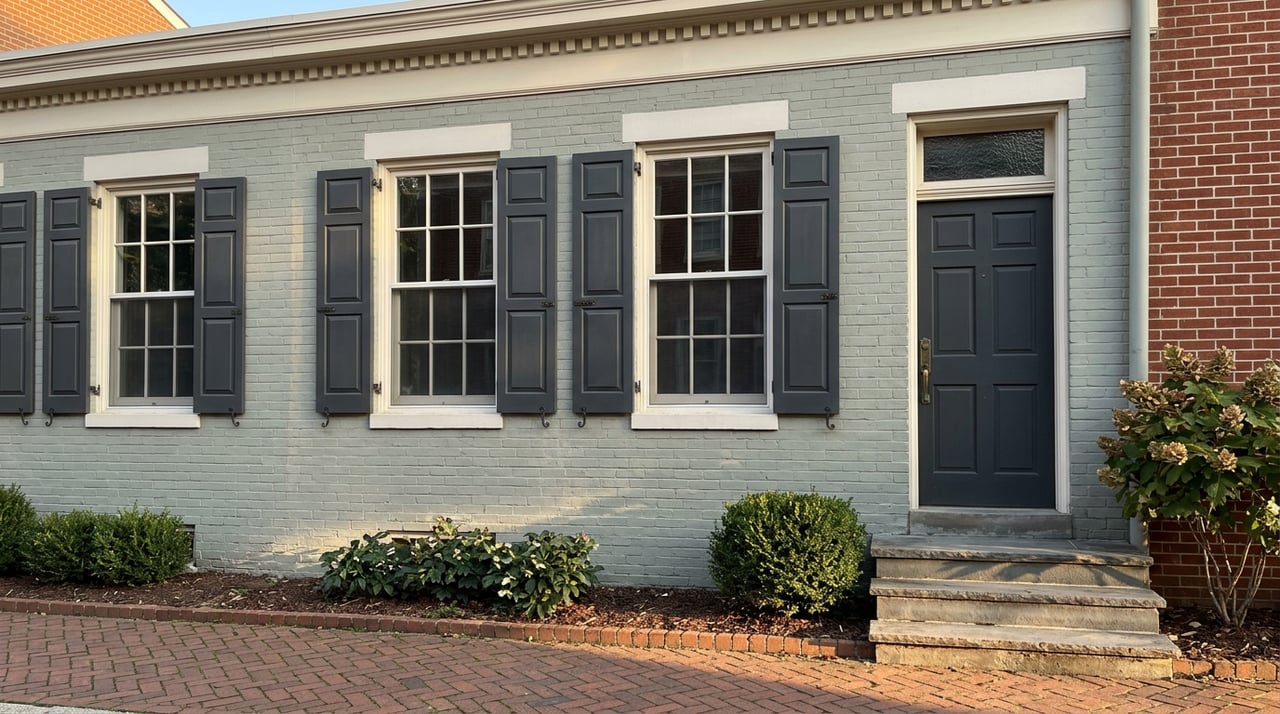
Newtown Borough vs Township Real Estate: What Changes
Steven Dome July 16, 2026
Steven Dome July 16, 2026
Pull up three real estate portals on the same afternoon and you will see three different Newtowns. One shows a median sale price in the mid‑$500s. Another shows a June 2026 median list price of $1.29 million. A third puts the Township list median at $889,500. The gap is not a data error. It is the shape of the market showing through the average.
When a buyer says "Newtown," the buyer is almost always talking about two adjacent municipalities that share a mailing address, a school district, and very little else. Newtown Borough is a historic walkable core of roughly 2,200 residents. Newtown Township wraps around it with close to 19,900 residents, mature planned communities, and the retail spine along Route 532. Both are in Bucks County. Neither behaves like the other in a transaction.
The reason the numbers look inconsistent is that every listing site draws a different boundary around "Newtown." Some pull the 18940 ZIP. Some pull the census place. Some pull an MLS geo tag that mixes the Borough, the Township, and slivers of Middletown and Wrightstown. When a Borough rowhouse and a five‑bedroom colonial in Linton Hill Chase get poured into the same median, the median stops telling you anything useful about either.
Where you're actually shopping | Character | Days on market (recent) | Municipal resale inspection | Typical HOA exposure |
|---|---|---|---|---|
Newtown Borough | Historic walkable core, State and Court Streets | Faster in the walkable tier | Yes — Use & Occupancy permit required for residential sales | Low, mostly detached historic homes |
Newtown Township | Suburban, planned communities, larger lots | 27 to 50 days depending on price band | No — U&O only required for new construction | High, dominated by master + cluster HOAs |
The single most useful thing a buyer can do before opening a spreadsheet of comps is decide which of those two rows they are actually shopping.
The Borough/Township line is invisible on any portal, but it changes the transaction. In Newtown Township, the answer to the resale inspection question is a flat no. A residential use and occupancy permit is only required for new construction. There is no pre‑sale municipal inspection, no punch list from a code officer, and no township escrow for deferred sidewalk work before closing.
Cross into the Borough and the answer flips. The Borough of Newtown issues Use & Occupancy permits through its Building and Zoning office, and residential sales run through that process. That means a code inspection, a possible violation letter, a five‑business‑day reinspection window if anything is flagged, and in unusual weather cases an escrow held by the municipality for work the seller cannot complete in time. None of that is exotic. It is standard on the older side of Chapter 69 of the Newtown building code. It is also invisible to a buyer who has only looked at Zestimates.
For a seller, the practical difference is timing. A Township listing can move from executed contract to close on the schedule the parties negotiate. A Borough listing carries a small but real municipal calendar on top of the private one. For a buyer, the practical difference is leverage. Anything the code officer flags in the Borough is a fact the seller must reckon with. That is a different kind of information than what an inspector produces for the buyer's own use.
The Township's housing stock is broad. It runs from ranch homes on quarter‑acre lots near the Route 332 bypass up to five‑bedroom new construction in Dolington Estates and Linton Hill Chase. Between those two ends sit the planned communities that define most of the day‑to‑day inventory:
The Township's median household income sat at roughly $147,600 in the 2020 to 2024 American Community Survey estimates, and the commuter profile is real. Mean commute time runs around 34 minutes, most of it toward Philadelphia, Princeton, and the Route 1 corridor. That commuter mix explains why most inventory here comes with a garage, a yard, and an HOA rather than a front stoop on a public sidewalk.
A Borough dollar buys the opposite trade. State Street and Court Street form one of the few genuinely walkable historic downtowns in Bucks County outside Doylestown. The Newtown Theatre still runs films, the Temperance House sits at the corner of State and Washington, and Pat's Colonial Kitchen operates out of an 1800s hotel building. Newtown Presbyterian Church has stood in stone since the 1760s. The Borough contains the character. The Township contains the volume.
The Borough is roughly one square mile. It is fully built out. New Borough inventory arrives only when an existing owner sells. In a typical month, the count of active Borough listings can be counted on one hand.
That is why the Borough price per square foot runs higher than the Township on comparable finish levels, and why days on market compress in the walkable tier even when the wider Newtown average lengthens. A buyer who wants a Borough address is not choosing between five candidates. The buyer is waiting for one of two to come on. Sellers on that side of the line price accordingly, and the premium is durable because the supply is structurally fixed. That is a different market condition than the Township, where new phases and turnover both add inventory.
For a buyer running a portal search, the practical implication is that a Borough listing at Township price per square foot deserves a hard look the same week it hits. For a seller, it means the Borough comps set that matters is small enough to be walked in an afternoon.
Most Township buyers are entering a community association whether they realized it or not. In Newtown Grant, the fee structure has two layers. The Master Association fee covers the clubhouse, the pool, softball, tennis, basketball, volleyball, playground, common parking, and management, per the association's own contact page. On top of that, each cluster inside the community collects its own fee to cover the common areas specific to that cluster, from stormwater basins to shared sidewalks and mailbox pads. Two neighbors on the same street can pay different cluster totals because their cluster's landscape burden is different.
Beyond dues, Pennsylvania does not cap resale certificate preparation fees by statute. In practice, the third‑party document services that most HOAs use charge somewhere in the $250 to $400 range per closing for the resale package a buyer's title company will ask for. That fee is not a listing price line item. It appears on the settlement sheet or gets negotiated between the parties. A Township buyer comparing two homes at the same list price should be asking which one is inside an HOA and, if it is, what the current dues, the reserve balance, and the resale certificate cost look like before the offer goes in.
Pennsylvania's May 2026 median sale price came in around $318,867, up 5.6% year over year, with 32.3% of homes selling above list, per Redfin's state aggregation. The Pennsylvania Association of Realtors reports listings dipped in May 2026 while the statewide median continued to climb. Those are useful macro anchors, but they are not the number a Newtown buyer should be reasoning from.
The right way to read the local data is to split it. Pull recent solds inside the Borough only, then pull recent solds inside the Township at the housing type and square footage you are actually shopping. The Borough set will be small and price‑per‑square‑foot heavy. The Township set will be larger and dominated by HOA communities. Median days on market for the combined ZIP has run anywhere from 27 to 50 days across recent monthly snapshots, and the range itself is the point. A well‑priced Borough listing and a well‑priced Township colonial are competing for different buyers on different clocks.
The mailing address will not tell you. The tax bill will. Property tax is levied by the Borough or the Township, not by the post office, and the assessment record in the Bucks County Board of Assessment database shows the municipality directly. Council Rock is the school district on both sides of the line, so the school row does not distinguish.
It can, though the ordinance builds in short cure windows. The inspection is scheduled after the application, violations are noticed within three business days, and a reinspection is available within five business days of the seller notifying the code office in writing that corrections are complete. In practice, the risk is not delay so much as surprise. A seller who applies late in the contract timeline compresses that cure window against a hard closing date.
Not always. Newtown Grant, for example, has single‑family, townhouse, and condominium phases inside the same master community, each with its own cluster board and its own fee. The lending treatment, the reserve study exposure, and the resale certificate content are not identical across those phases. A buyer should ask for the phase name and the specific cluster before assuming what the fee covers.
If you are working out what your budget actually buys in Newtown, the answer sits on which side of the municipal line you land on and what community you land in once you get there. Steven Dome reads both sides of that line for a living and can walk you through the Borough and Township comps, the HOA exposure, and the transaction calendar before you write an offer. Let's Connect.
September 17, 2026
September 17, 2026
September 10, 2026
September 3, 2026
September 2, 2026
September 2, 2026
August 27, 2026
August 20, 2026
August 13, 2026
Get assistance in determining current property value, crafting a competitive offer, writing and negotiating a contract, and much more. Contact me today.
Contact me to learn more.

550 Union Square Drive New Hope, PA 18938