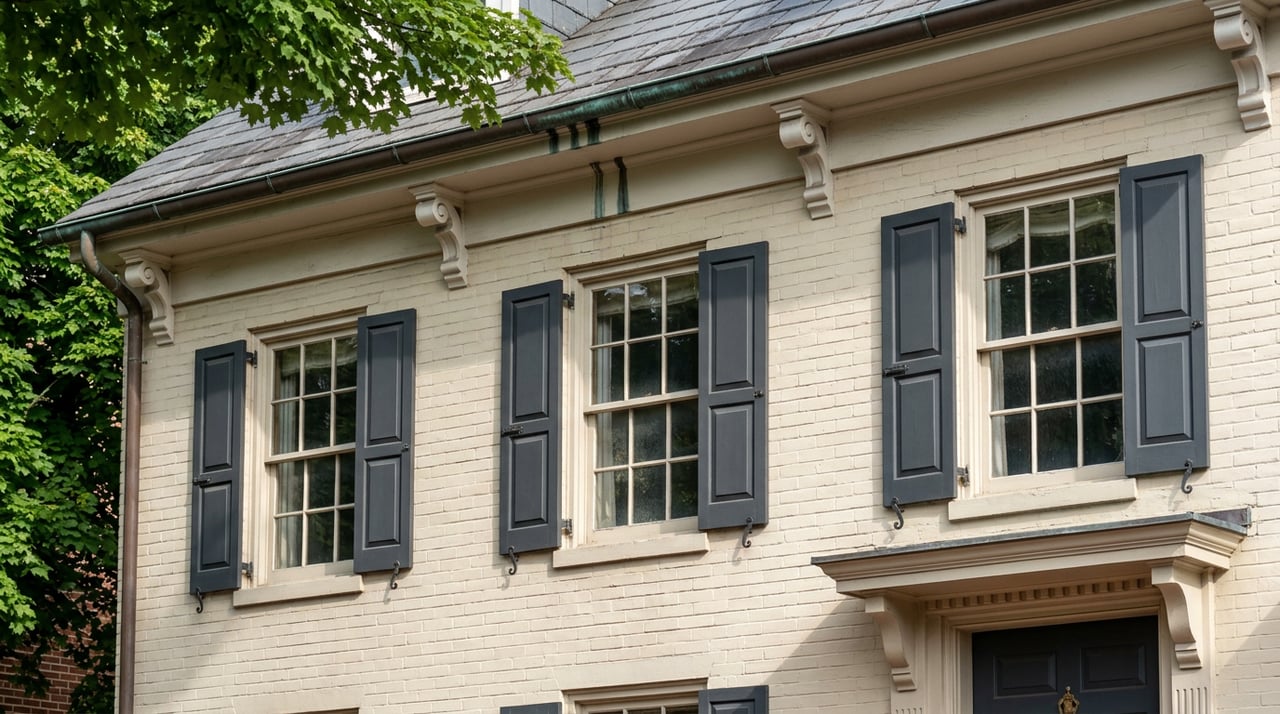
Selling Inside Doylestown Borough's Historic District: The One Exposure Most Sellers Miss
Steven Dome July 30, 2026
Steven Dome July 30, 2026
A buyer's agent walking a Pine Street Victorian in 2026 opens a different set of questions than one walking the same house ten years ago. They ask when the second-floor windows were replaced. They ask whether the rear dormer has a Certificate of Appropriateness on file. They ask whether the black steel handrail on the front stoop was reviewed. If the seller shrugs, the agent writes a longer inspection contingency and a shorter list of concessions the buyer is willing to grant.
The Historic District overlay is not the friction. Most owners inside the district already understand that they cannot swap clapboard for vinyl on a whim. The friction is what a previous owner did without asking, and the way Pennsylvania's disclosure statute puts that history squarely on the current seller's shoulders.
Doylestown Borough's Historic and Architectural Review Board was established in 1970 and consists of nine members appointed by Borough Council to three-year overlapping terms. Its jurisdiction is narrow but sharp.
Reviewed: all exterior building changes, additions, new construction, demolition, and signs visible from a public street or way. That includes fences, retaining walls, and similar structures.
Not reviewed: any modification to the interior of a structure, and repainting or color choice on its own when no other construction is planned. Features not visible from a public street or way sit outside HARB's authority even when they are on a Historic District parcel.
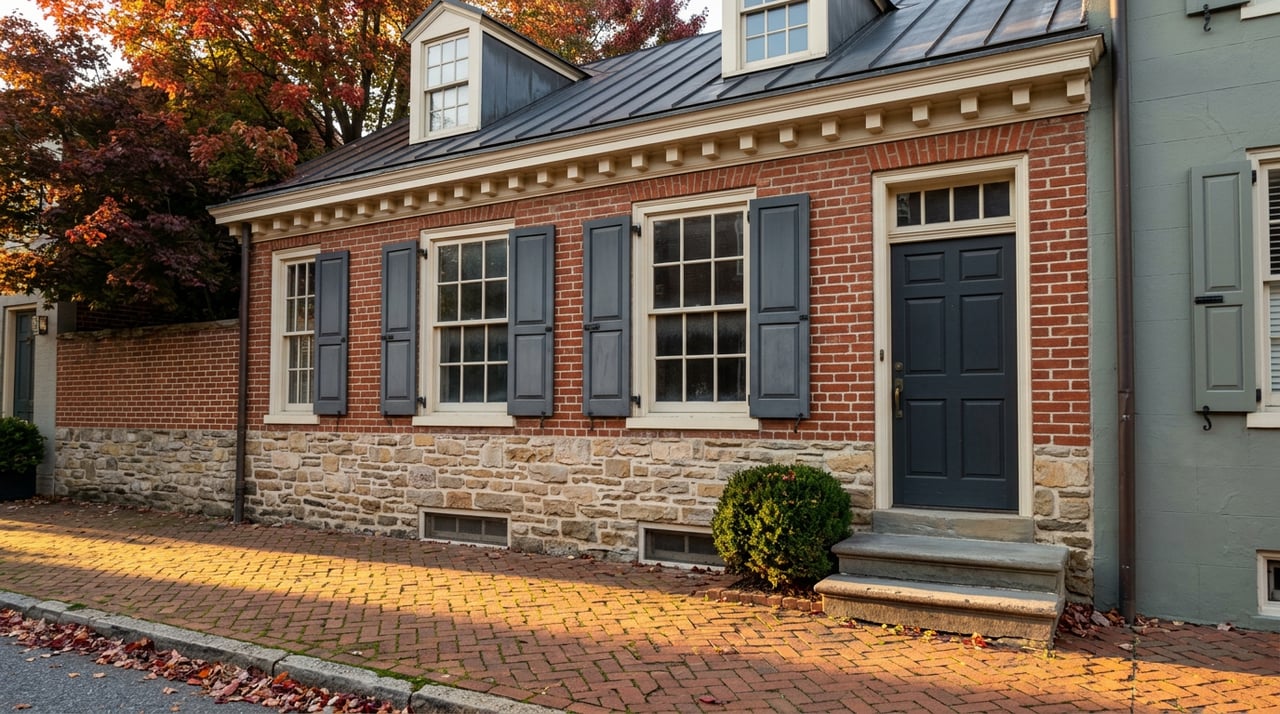
The distinction matters at the listing table. A kitchen gut-renovation with new plumbing and electrical needs Borough construction permits, but it does not need HARB review. A rear-facing deck screened entirely by a neighbor's garage may not need HARB review either. The exposures cluster on the street-facing envelope: windows, doors, roofs, dormers, porches, siding, front-yard fencing, and signs.
Doylestown Borough Code Chapter 4 §204 sets the specific trigger. Except for interior work and normal exterior maintenance that does not alter the appearance of the building, the Building Inspector cannot issue a permit for exterior work inside the Historic District where the cost or value exceeds $2,000 until Borough Council issues a Certificate of Appropriateness. The threshold has a companion clause the code addresses directly, prohibiting owners from breaking a project into pieces, buying materials piecemeal, or contracting piecemeal for the purpose of evading the requirement.
Two thousand dollars is a low number. A single window replacement on the front elevation clears it. A shutter change with new hinges and hardware clears it once labor is priced. A wrought-iron railing replacement clears it. So does most fencing, most roof work, and any sign at all.
Sellers who did the work themselves usually remember. The problem is the previous owner. A house that traded twice in the last decade may carry two rounds of exterior changes, and only some of them ran through Borough Council.
Pennsylvania's Real Estate Seller Disclosure Law, 68 P.S. §7301 and following, requires the seller to disclose all known material defects that are not readily observable before an agreement of sale is signed. The statutory form at 49 Pa. Code §35.335a does more than ask about physical condition. It puts the buyer on notice, in the form's own instructions, that:
Buyers should check with the municipality to determine if permits and/or approvals were necessary for disclosed work and if so, whether they were obtained. Where required permits were not obtained, the municipality might require the current owner to upgrade or remove changes made by the prior owners.
That sentence is the exposure. The obligation to bring a non-conforming exterior alteration back into compliance runs to the record owner, not to whoever installed the offending feature five owners ago. A buyer who reads the disclosure carefully, and a buyer's attorney who reads it carefully every time, will ask for proof that the visible exterior work was authorized. If the seller cannot produce it, the request usually becomes a credit at closing or a pre-settlement remediation, and occasionally a walk.
A pre-listing sweep should focus on the elements that clear the $2,000 threshold quickly and are most often installed by owners who did not know they were inside the district overlay.
Painting is not reviewable on its own. Interior renovations are not reviewable. Rear-yard features screened from any public street or way are not reviewable. That distinction is the seller's friend, and it is worth reading the ordinance closely before conceding a point during negotiation.
The remediation for this exposure is administrative, not architectural. It happens at Borough Hall.
Doing this work before the listing photograph is taken changes the negotiation. Doing it after the inspection report lands changes the price.
The first is that HARB does not meet on demand. Applications collect for a scheduled Council meeting, and the two-week filing rule creates a floor on how quickly a retroactive Certificate can be issued. A buyer who wants a resolution before settlement will read the meeting calendar and set contingency dates against it.
The second is the borough's current infrastructure work. The ongoing East and West State Streets repaving, the first major repaving of that corridor since the 1990s and funded by the state, is drawing more attention to the streetscape than usual. Buyers touring properties on and around State are paying closer attention to what is visible from the sidewalk than they were two years ago. That is not a market shift. It is a diligence shift, and it favors sellers who arrived at the listing with a clean file.
Every conversation about the district benefits from remembering what the board does not touch. Interior renovations, no matter how ambitious, are exempt from HARB requirements, though standard construction permits still apply. Repainting a facade without any other construction is exempt. Doylestown Township, which surrounds the borough, has its own Historical Architectural Review Board with a similar structure, but the borough overlay is what governs the addresses inside the borough limits. A Certificate of Appropriateness from one is not a substitute for the other.
The disclosure statute asks about known material defects and about work you have knowledge of. If a prior owner installed a feature without the required Certificate, and you know about it, the safer answer is disclosure with documentation of what you have done to resolve it. A buyer's attorney will look for both.
No. The board does not regulate repainting or color as long as no other construction is planned. That is one of the few bright lines in the ordinance.
HARB advises Borough Council. Council issues the Certificate. An applicant can request that Council consider the application even where HARB's recommendation is unfavorable, and the two-week filing rule sets the timing.
The National Register nomination was prepared in 1985 by the Bucks County Conservancy and describes the district for federal recognition purposes. The Borough's regulatory overlay is a separate local designation created under the 1961 state Historic District Act and administered by HARB. The two often align in geography, but the local overlay is what governs a permit review.
Preparing a Doylestown Borough home for market is a documentation exercise as much as a staging exercise, and the file at Borough Hall is where the negotiation is usually won or lost. If you own inside the district and are thinking about a listing in the next six to twelve months, Steven Dome can walk the exterior with you, pull what needs pulling, and build a pre-listing plan that closes the gaps before a buyer's diligence has the chance to open them. Let's Connect.
August 20, 2026
August 13, 2026

August 12, 2026
August 12, 2026
August 12, 2026
August 9, 2026
August 8, 2026
August 6, 2026
August 3, 2026
Get assistance in determining current property value, crafting a competitive offer, writing and negotiating a contract, and much more. Contact me today.
Contact me to learn more.

550 Union Square Drive New Hope, PA 18938